

Aquaponics System Design & Construction in New Orleans
Soylent Greens designs, builds, troubleshoots, and maintains aquaponic and recirculating aquaculture systems for schools, farms, institutions, restaurants, training facilities, and controlled-environment agriculture projects in New Orleans and Southeast Louisiana.
Aquaponics is not just hydroponics with fish attached. It is a living life-support system where fish, plants, microbes, pumps, plumbing, oxygen, filtration, water chemistry, and daily maintenance all have to work together.
Need an aquaponic system designed, repaired, or brought back under control? Contact Soylent Greens for aquaponics consulting, system design, troubleshooting, and maintenance in the New Orleans metro area.


From School Learning Labs to Institutional Aquaponics


Dominic Graves’ aquaponics work began before Soylent Greens, with the design and construction of an aquaponic garden learning lab at Metairie Park Country Day School’s Lower School. Dominic used the system as a teaching tool while working at Country Day, helping students connect biology, water chemistry, plant growth, animal care, sustainability, and engineering through a real, living system.
The aquaponic garden won Country Day 1st place in the Elementary School division of the 2019 Louisiana Green Schools Challenge, a statewide student-centered sustainability competition. The award came with a large cash prize and green school infrastructure recognition through the Challenge.
Soylent Greens later grew out of that hands-on aquaponics work, launching during the early COVID era as a New Orleans aquaponics farm focused on small-scale food production, aquatic life support, controlled-environment agriculture, and closed-loop growing systems.
From there, the work expanded into larger and more technical systems, including an aquaponic greenhouse build for Williby’s Catfish and a major role in the design, planning, sourcing, construction, and operational development behind the AgriAquaculture Center of Excellence in Harvey, Louisiana, a major institutional aquaponics and recirculating aquaculture training facility and the largest aquaponic facilities in the state. That work meant translating the concept into a functioning facility: laying out the fish systems and hydroponic production areas, sourcing and speccing equipment and materials, plumbing the systems, organizing and optimizing nursery flow, helping identify and assemble the staff needed to operate the facility, consulting with the Louisiana Chamber of Commerce Foundation on key hires, and refining the operator workflow before explaining the living system to visitors, stakeholders, and future users.
That path is the core of Soylent Greens’ aquaponics work: designing systems that can actually operate after the ribbon-cutting. We help with new aquaponic system design, existing system troubleshooting, school learning labs, greenhouse systems, small farm systems, institutional training systems, water quality management, filtration, aeration, plumbing, and maintenance planning. We also help clients understand the limitations of tightly coupled aquaponic systems and when a more decoupled approach may make sense, especially when fish health, plant nutrition, pH, solids management, and day-to-day operation start pulling the system in different directions.


Coupled vs. Decoupled Aquaponics
Aquaponic systems can be tightly coupled, fully decoupled, or designed somewhere in between.
A coupled system keeps the fish tanks, biofilter, and plant-growing area on the same circulating loop. It is elegant, efficient, and easy to teach, which makes it a strong fit for classrooms, demonstrations, and smaller learning labs. The tradeoff is that everything has to be balanced in the same water. Fish often prefer a different pH range than many hydroponic crops, while plants may want more control over nutrient strength, mineral availability, and solids than the fish system can comfortably provide.
A decoupled or partially decoupled system gives the fish side and plant side more independence. Water or nutrients can move between zones without forcing every part of the system to run at one compromise pH or under identical conditions. That added control can be valuable for greenhouses, production systems, institutional facilities, or any project where fish health and plant growth need to be managed separately.
Soylent Greens helps clients choose the structure that fits the goal: simple and teachable, production-focused, or hybrid enough to stay stable as the system grows.

Educational Aquaponics Systems
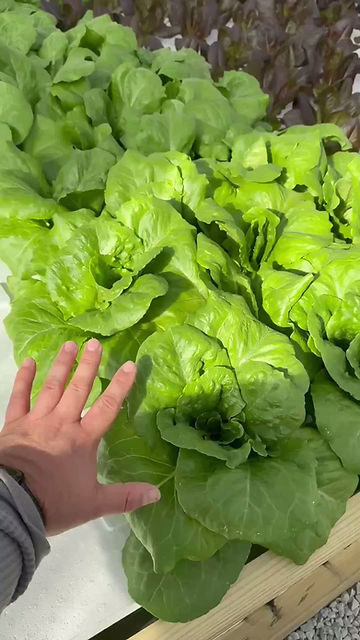
Soylent Greens can design educational aquaponics systems for classrooms, science labs, greenhouses, and school gardens. These can range from compact classroom rack kits to larger learning-lab systems with fish tanks, grow trays, lighting, aeration, filtration, water testing supplies, maintenance instructions, and lesson-plan support.
Rack systems are especially useful in classrooms because they double as organized shelf space for student lab projects, plant starts, observations, and water-quality work. From classroom experience, Dominic knows how much good shelving can help with classroom management, especially when multiple students or groups are working from the same system.
Whether it is catfish, herbs, or leafy greens, an educational aquaponics system can connect biology, chemistry, food production, engineering, and sustainability in one living classroom. For schools that want to go further, these systems can also support tastings, culinary lessons, garden-to-cafeteria conversations, lunch program partnerships, or broader farm-to-school programming.